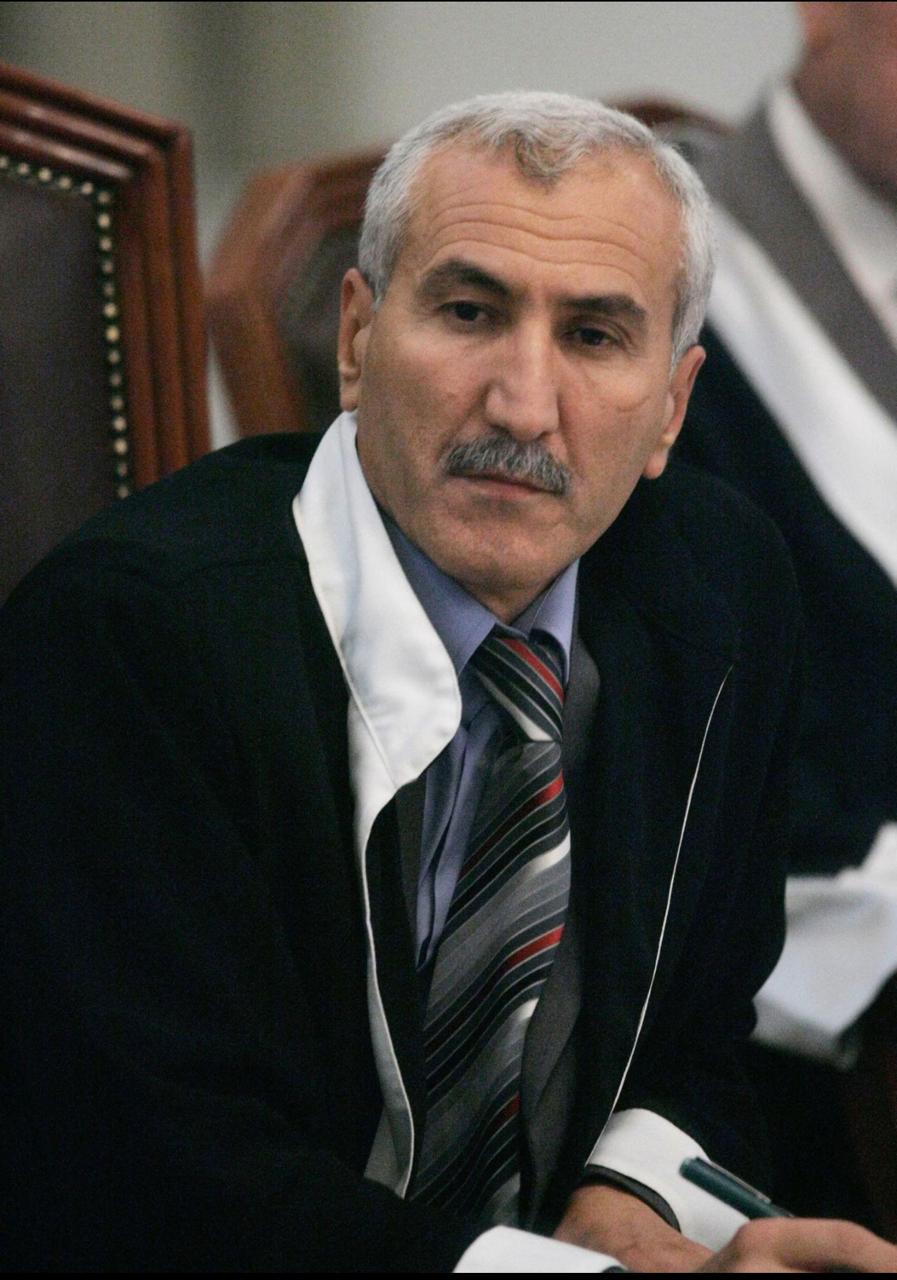
The Iraqi Kurdish judge Rizgar Mohammed Amin is one of the most prominent judicial figures to emerge in Iraq after 2003. His name is inextricably linked to presiding over one of the most significant trials in modern Iraqi history: the trial of former Iraqi President Saddam Hussein. Judge Rizgar became widely known for his calm demeanor and his steadfast commitment to legal principles and judicial independence. -- Early Life and Education Born in 1957 in the city of Sulaymaniyah, in the Kurdistan Region of Iraq, Rizgar Mohammed Amin grew up in an environment that valued education. This led him to pursue a career in law at the University of Baghdad, where he graduated from the College of Law. He began his professional journey as a lawyer before transitioning to the judiciary. Over the years, he gained extensive experience within the Kurdish judicial system, particularly after the establishment of autonomous institutions in the region during the 1990s. --- The Trial of the Century Judge Rizgar gained international fame in 2005 when he was appointed Chief Judge of the Iraqi High Tribunal. He presided over the trial of Saddam Hussein and several high-ranking officials in the **Dujail case**, which centered on the events that took place in the town of Dujail in 1982. Throughout the proceedings, he was noted for: * **Maintaining Legal Protocol:** He sought to ensure the trial remained a strictly legal process rather than a political spectacle. * **Protecting Defendant Rights:** He insisted on granting the accused their rights according to established judicial procedures, a stance that drew significant international media attention. --- ### Resignation and Legacy In **January 2006**, despite his pivotal role, Judge Rizgar announced his resignation from the tribunal. His decision followed intense political and media pressure, as well as sharp criticism regarding his perceived "leniency" in managing the courtroom sessions. He maintained that such external pressures compromised the **independence of the judiciary**. > "The independence of the judge is the foundation of justice; without it, the law loses its essence." After stepping down, he largely withdrew from the spotlight but remains a highly respected legal authority in both Iraq and the Kurdistan Region. Today, he is remembered as a judge who attempted to uphold the principles of justice and the rule of law during one of the most sensitive and turbulent periods in his country's history.
Email: contact@visionaidngo.org